




September 20, 2026
Updated July 2026.
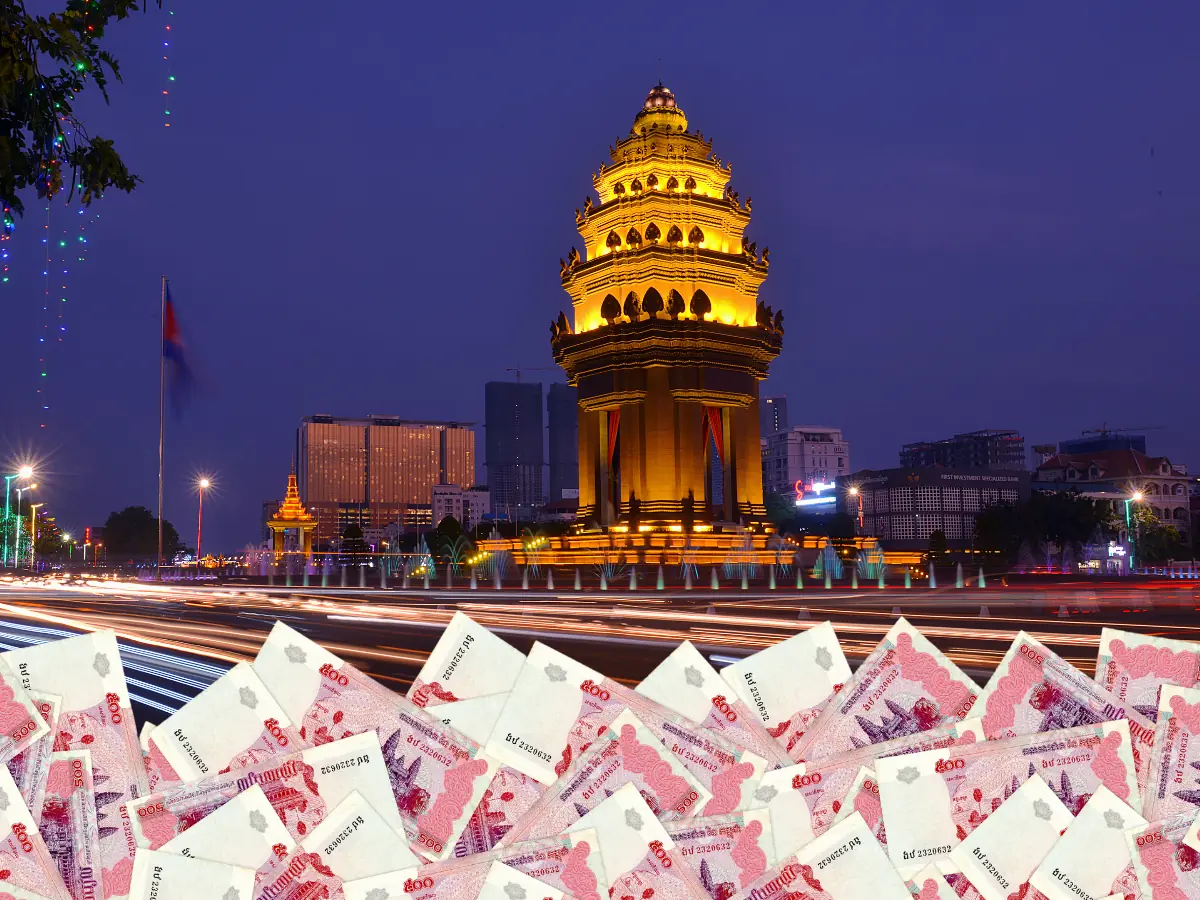
Cambodia uses two currencies side by side: the US dollar for most prices and the Cambodian riel for small change.
This guide covers exactly what you need to know before you arrive: which currency to carry, which ATMs to use, what digital payments work, and the practical details that save you from awkward moments at the checkout.
KEY TAKEAWAYS
- Dual currency: USD for anything over $10-20. Cambodian Riel (KHR) for small change. Exchange rate: ~4,000 KHR = $1.
- Bring clean bills: Crisp $50s and $100s from home. ATMs dispense only $100 bills in USD. Small denominations ($1-$5) are being phased out.
- Best ATM: BRED Bank ($4 fee, up to $2,000 per withdrawal). Avoid ABA for foreign cards.
- Digital payments: KHQR codes accepted at 4.9 million merchants. The Bakong Tourist App works without a Cambodian bank account.
- Buy your Angkor pass online: Angkor Enterprise accepts cards. Soft copy on your phone.
| OFFICIAL CURRENCY | Cambodian Riel (KHR) | Used for change under $10 |
|---|---|---|
| DAILY CURRENCY | US Dollar (USD) | Hotels, tours, restaurants |
| EXCHANGE RATE | ~4,000 KHR = $1 | Stable, rarely shifts |
| ATM FEES | $4 to $6 per withdrawal | Dispenses $100 bills only |
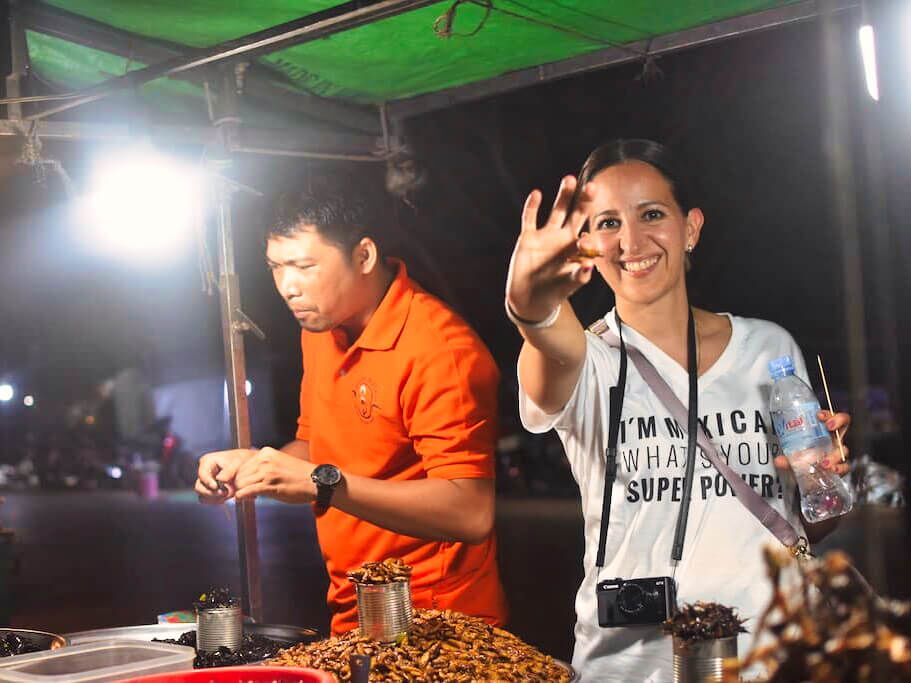
When I opened my first restaurant opposite Angkor Wat at 16, people were still trading in gold. After the Khmer Rouge, Cambodia had no functioning currency. We used Vietnamese dong, gold, and rice before the dollar took over. Two decades later, I can scan a QR code at a noodle stall in Siem Reap and pay from my phone in seconds. Cambodia’s money story is changing fast, and most travel guides haven’t caught up.
Planning your Cambodia trip? Currency is one detail. Who shows you Angkor is the one that changes the trip. Our local team designs private days around you. Explore private experiences →
The Dual Currency System
Cambodia runs on two currencies simultaneously, and it is simpler than it sounds. The US dollar handles anything above $10-20: hotels, restaurants, tours, visa fees, supermarkets. The Cambodian Riel handles everything below: tuk-tuks, market snacks, bottled water, street food. You do not need to think about which to use. The situation presents itself naturally.
The exchange rate sits at approximately 4,000 KHR to 1 USD and has barely moved in years. The 52-week range is 3,974 to 4,054 (National Bank of Cambodia). In practice, vendors round to 4,000. All change below $10 is given in Riel. If something costs $3 and you pay with a $10 bill, you will receive 28,000 Riel back. That is normal, and the math is simple: $7 x 4,000 = 28,000. Do not try to exchange Riel before your trip. It cannot be obtained outside Cambodia and cannot be exchanged when you return home. Let it accumulate naturally as change, and spend it before you leave.
GOOD TO KNOW
There is no plan to eliminate the US dollar. The National Bank of Cambodia is gradually increasing Riel usage through digital payments, but USD remains dominant for larger transactions. For travelers, nothing changes: bring dollars, receive Riel as change.
Which Bills to Bring
Bring crisp, undamaged $50 and $100 bills from home. This is the single most practical piece of currency advice for Cambodia. ATMs now dispense only $100 bills in USD, so arriving with a mix of $20s and $50s gives you flexibility that the machines cannot.
Small-denomination bills ($1, $5) are being phased out by the National Bank of Cambodia (Cambodianess). Banks no longer issue them and many merchants prefer not to handle them. The $10 and $20 bills remain useful for day-to-day spending, but $50s and $100s are what you will need for hotels, tours, and larger purchases.
IMPORTANT – BILL CONDITION
Dollar bills must be in good condition. In 2025, Prime Minister Hun Manet instructed banks to accept slightly marked notes without penalties (Khmer Times). Light creases and minor stains are now more widely accepted. However, torn, taped, or heavily written-on bills are still routinely refused. Ask for clean, post-2006 series notes at your bank before you travel.
Exchanging Money
Arriving with US dollars is the simplest strategy. If you are traveling from Europe or Australia, the exchange rate inside Cambodia is typically better than what you would get at home. Skip the airport exchange counters, where rates are noticeably worse. In Siem Reap, the best rates are at exchange shops inside Phsar Leu market and along the Old Market area. They are easy to spot: currencies displayed in glass cabinets at the entrance.
Do not exchange USD into Riel directly. You will receive Riel naturally as change throughout your stay. Exchanging directly gives you a worse rate and more notes to manage.
ATMs: Which Bank, What to Expect
ATMs are widely available in Phnom Penh and Siem Reap. Every one of them charges a fee on top of whatever your home bank charges. The differences between banks are significant, especially if you plan to withdraw larger amounts.
| Bank | Fee | Max Withdrawal | Notes |
|---|---|---|---|
| BRED Bank | $4 | $2,000 | Best for larger withdrawals. One transaction covers a full trip. |
| PPCBank | $5 | $1,000 | Reliable, consistent pricing. |
| Canadia Bank | $5 | $500 | Widely available across Cambodia. |
| Acleda Bank | ~$5 | Varies | Good for smaller denominations in KHR. |
| ABA Bank | $4-$8 | $500-$800 | Most locations, but foreign Mastercard fees can reach 3%. Use Visa. |
BRED Bank is the clear choice for travelers who prefer fewer transactions. One withdrawal at $4 covers what might cost $20-30 in fees across multiple withdrawals. In rural areas, on islands like Koh Rong, and in most provincial towns, ATMs are scarce or nonexistent. Withdraw enough cash before you leave the city.
MY PICK
Take the tours out of your cash math entirely. Our Angkor days are booked and paid online by card before you fly, so they never touch your withdrawal budget. What comes out of the ATM is for the markets and a cold coconut by the moat.
Digital Payments and KHQR
This is where Cambodia has surprised everyone. The country's digital payment system, built on the National Bank of Cambodia's Bakong platform, processed 1.33 billion transactions in 2025 (Phnom Penh Post). That is in a country of 17 million people. KHQR codes, Cambodia's unified QR payment standard, are now accepted at 4.9 million merchant locations, from hotel lobbies to noodle stalls.
For visitors, the practical tool is the Bakong Tourist App, launched by the central bank in 2024 specifically for foreign travelers (Phnom Penh Post). You do not need a Cambodian bank account. Download it from Apple App Store or Google Play, load it with funds, and scan KHQR codes at participating merchants. It also works cross-border if you are continuing to Thailand, Vietnam, or Malaysia.
Beyond KHQR, most hotels, restaurants, and tour operators in Phnom Penh and Siem Reap accept Visa, Mastercard, Apple Pay, and Google Pay. At Adventures Cambodia, our private Angkor tours are booked and paid online, or settled on-site by card. In rural areas and on islands, cash remains the only reliable option.
MY PICK
Carry cash as your primary method and treat digital payments as a convenient backup. The KHQR system works well in Siem Reap's restaurants and shops, but you will still need dollars for tuk-tuks, smaller vendors, and anything outside the city. A mix of $300-500 in clean bills plus a working card covers most trips comfortably.
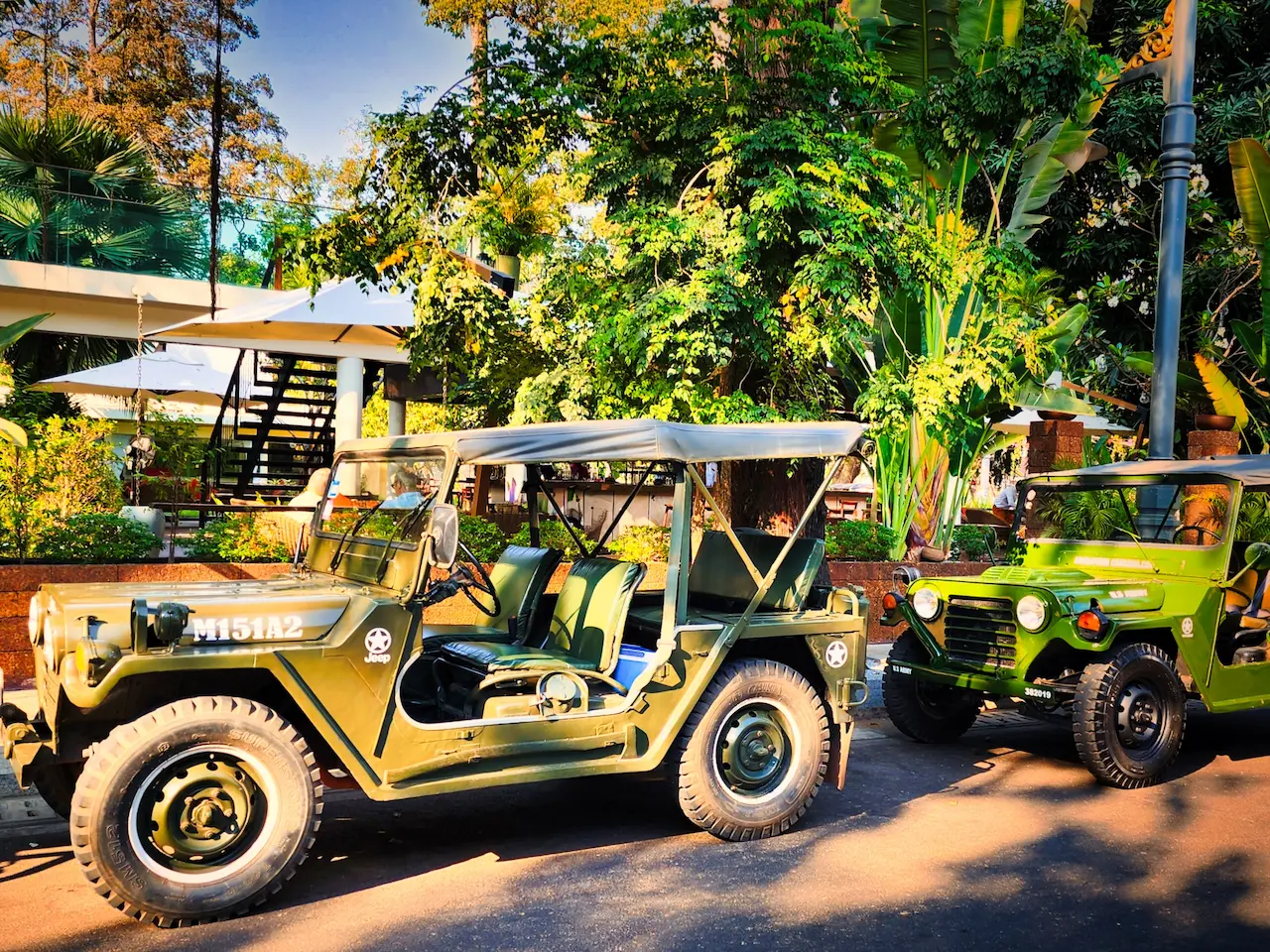
Beyond the temples? Go to the Tonle Sap. The lake is an afternoon from Siem Reap: Kampong Phluk's houses on stilts, a boat out on the water and a guide who lives in the village, by vintage Jeep and back after sunset. See the Tonle Sap tour →
Tipping in Cambodia
Tipping is not traditionally part of Cambodian culture, but it is appreciated in the tourism industry. There are no firm rules, but here is what works well:
- Restaurant staff: 10% or round up the bill. Most restaurants do not add a service charge.
- Tuk-tuk drivers: Round up to the nearest dollar on short rides. $2-5 extra for a full day.
- Temple guides: $10-20 for a full-day licensed guide, depending on group size.
- Hotel housekeeping: $1-2 per night, left on the pillow or nightstand.
- Spa therapists: $3-5 for a good treatment, more for exceptional service.
Tip in USD for anything over $2, in Riel for smaller amounts. Do not tip with coins of any currency. Cambodian businesses rarely handle foreign coins, and there is no practical way to use or exchange them here.
FAQ: Cambodia Currency
What currency does Cambodia use?
Two at once: the US dollar and the Cambodian Riel (KHR). The Riel is the official currency, but the US Dollar is dominant for most transactions above $10-20. Hotels, tours, and restaurants price in USD.
Why does Cambodia use the US dollar?
Trust, mostly. The Khmer Rouge abolished money entirely in 1975, and the Riel that returned in 1980 never won back full public confidence. When the UN mission of 1992-93 brought 22,000 staff spending dollars into an economy without a stable monetary system, the dollar took hold and stayed (Cambodianess).
Do I need US dollars in Cambodia?
Yes. US dollars are accepted almost everywhere, and most prices above $10-20 are listed and paid in USD. Bring clean $20, $50, and $100 bills. You will receive Riel as change for amounts under $10.
Should I pay in US dollars or riel?
Match the price. Bills above $10-20 are quoted and paid in US dollars, while market snacks and tuk-tuk rides run in Riel. You rarely need to decide: change under $10 comes back in Riel, so a small supply builds up naturally within your first day.
What is the USD to KHR exchange rate?
Approximately 4,000 KHR to 1 USD. The rate is remarkably stable, with a 52-week range of just 3,974 to 4,054. Check the daily official rate at the National Bank of Cambodia.
Can I get Riel before traveling to Cambodia?
No. Riel is only available inside Cambodia and cannot be exchanged internationally. You will accumulate it naturally as change from USD transactions.
Are damaged US dollar bills accepted in Cambodia?
Slightly marked bills are now more widely accepted following a 2025 government directive. Badly torn, taped, or heavily written-on bills remain refused. Always bring clean, undamaged notes.
Are ATMs easy to find in Cambodia?
Yes, in Phnom Penh, Siem Reap, and Sihanoukville. ATMs charge $4-6 per withdrawal and dispense $100 bills in USD. In rural areas and on islands, ATMs are rare. Withdraw cash before leaving the city.
Can I pay by card or mobile in Cambodia?
Yes, in major cities. Most hotels and tour operators in Phnom Penh and Siem Reap accept Visa, Mastercard, Apple Pay, and Google Pay. The Bakong Tourist App lets you scan KHQR codes at millions of merchants without a Cambodian bank account. In rural areas, cash is still required.
Do I need cash in Cambodia?
Yes, carry cash. Cards and KHQR cover most of Siem Reap and Phnom Penh, but tuk-tuks and market stalls still run on it. Carry a comfortable amount in clean bills for flexibility, and use BRED Bank if you need a top-up. If you are heading to islands or rural provinces where ATMs are scarce, withdraw what you need before leaving the city.
Before your trip, it is also worth reading our guide on safety in Cambodia, covering health, traffic, and the current situation for travelers. Once the money side is sorted, the next two questions guests ask me are how many days to spend in Siem Reap and where to begin when planning your visit to Angkor.
Make the most of your time in Cambodia
Knowing how to pay is useful. Knowing where to go, and who to go with, changes the trip. Siem Reap and Angkor with a private local guide, at your pace.